Nov 26, 2013

Sociology of Soccer, Fall 2013


Brett Cameron
Solena Cavalli-Singer
Nolan Claire
Sofie Cordani
Zachary Frank
Alexander Frustaci
Kelsi Garson
Shawna Kerigan
Priscilla Kim
Allycia Kleine
Chad Lessard
Jirika Nikoletopoulos
William Risley
Alexandra Venegas
Paige Woodie

Nov 25, 2013

Sunstroke Under the Tuscan Sun

The 1996 memoir by American author Frances Mayes Under the Tuscan Sun is the New York Times notable book of 1997 and New York Times bestseller for more than two and a half years. The book has been translated into 18 languages ‒ see the reviews at Goodreads ‒  and the film adaptation by Audrey Wells (2003) was a box office success earning $43,610,723 domestically and a further $15,268,000 internationally, totaling $58,878,723 worldwide (here you can find the movie review Restoring a Villa While Repairing the Heart). All of this to say: the story has been read and seen by many people all over the world (and especially in the US).
The book includes several chapters of recipes, and this choice, is tightly connected to the quest for the “authentic” Italian experience ‒ where food & wine are essentials elements of the romantic approach I am trying to depict (see the post Under the Tuscan Sun: Staged Authenticity).  But let’s go step by step.
Frances is a writer unable to write; she isn’t sure what to do with her life after her divorce; she is emotionally smashed. How (i.e. where) could she start a new life? Where can she find new existential meanings? What place on earth will favor an emotional rebirth? Where can she come across the contemporary version of the Sangre Reel, a modest private balsam for the soul? The answer is simple: Italy (Tuscany, Florence), of course. George Simmel interprets Florence precisely in the opposite way: the perfect place for those who are in peace with themselves and with their lives, either because they have achieved what they wanted or because they somehow accepted their life as it is.

“The inner boundaries of Florence are the boundaries of art. Florence is not a piece of earth on which to prostrate oneself in order to feel the heartbeat of existence with its dark warmth, its unformed strength, in the way that we can sense it in the forests of Germany, at the ocean, and even in the flower gardens of some anonymous small town. That is why Florence offers us no foundation in epochs in which one might want to start all over again and to encounter the sources of life once more, when one must orient oneself within those confusions of the soul to an entirely original existence.
Florence is the good fortune of those fully mature human beings who have achieved or renounced what is essential in life, and who for this possession or renunciation are seeking only its form” (Simmel 1906/2007, 41, emphasis added).
 
Yet, the pathway to Italy and Tuscany is readily available and well definite by centuries of storytelling.  Patty, France’s best friend, gives to the protagonist a ticket for a two-week tour of the Tuscany region ‒ I would not be surprised to find an agency promoting a tour to Florence or Siena like this: “Your emotional life is in pieces? No problem! Join the authentic Tuscan tour”.
Through a series of (apparently) serendipitous events, France purchases a decaying villa in the Tuscan countryside and ‒ the easy catching metaphor for the reconstruction her Self-identity ‒ decides to restore it. She has, of course, a romance with an Italian man ‒ Marcello[1] ‒ however (obviously, as we will see in a moment) the story does not last. And, again unsurprisingly, the protagonist sentimental itinerary ends ‒ after having experienced the unfamiliar and unknown ‒ with a return back home. Frances at the end of the story falls in love with an American man (who is also a writer): the very familiar, both as belonging to a culture and to a class.
We can find more or less the same protagonist characterization and plot in The Portrait of a Lady (Henry James; film adaptation by Jane Campion, 1996) and in A Room with a View (E.M. Forster; film adaptation by James Ivory, 1985). It is always about a woman (American or English) in search for her Self-identity. And the common theme to all these stories ‒ better, the Grand-Tour-Grand-Theme with its articulations ‒ is a mere dichotomy: the New and the Old World. The modern, rational, civilized, “cold” New World (United States or North Europe) versus the irrational, uncivilized but passional and romantic Old World: Italy (Tuscany, Florence).  
Florence and its surrounding landscape ‒ Chianti region included, which is by the way just a small portion of the very diverse Tuscany region ‒ are the idealized places (better: settings or movie ‘locations’) for  the psychological/emotional travel toward the past, the roots of the western civilization. It is in this never changing land that the traveler will be able to find and freely express herself again, revitalizing the natural, genuine, primary union with her human nature.
Florence (Italy) is the place where everybody slows down and enjoys life, eating every day with the extended family for six hours (three at lunch and three at dinner): all of my students arrive here with this image and most of them bring it back home intact ‒ despites all of my attempts to deconstruct it or to enrich it. No need (no need?) to say that this is a portrayal of a pre-modern, traditional Tuscany (Italy) that does not exist and, by the way, never existed. No one with a minimal historical education (sense of reality, if you prefer) can imagine an Italian peasant ‒ as any rustic in the world ‒ having so much time and money to slow down and enjoy life. Any person with some equilibrium between the pleasure principle and the reality principle (Freud 1911, 1920), can interpret the romantic traditional Italian image as topos in the tourist gaze.
Nevertheless, this narrative about Italy written centuries ago has its strong hold upon the foreigner experiences of Italy: this self-perpetuating myth becomes a self-fulfilling prophecy.

“The self-fulfilling prophecy is, in the beginning, a false definition of the situation evoking a new behavior which makes the original false conception come ‘true’. This specious validity of the self-fulfilling prophecy perpetuates a reign of error. For the prophet will cite the actual course of events as proof that he was right from the very beginning” (Merton 1948, 195).

Hence, besides its adherence to the social reality, this script is a fundamental framework to understand foreigners’ experiences in Florence. It is the theorem of the definition of the situation that we shall bring at the center of the interpretation as the locus foci: “It is not important whether or not the interpretation is correct… If men define things as real, they are real in their consequences” (W.I. Thomas 1923). And this foreigner Will to Believe (James 1956) is respectable as much as it is acceptable the local controcanto (mine) Will to Doubt (Lloyd 1907). Although it is not the objective of this post to analyze the relation between beliefs and reality, we can point out how people have the tendency to reduce cognitive dissonance by altering existing thoughts or adding new ones to create consistency (Festinger 1956). Moreover, this romantic idea of Florence is reinforced by touristic guides and the locals themselves, who are not the passive receivers of such foreigners’ representations and projections; locals have a different role but they are playing on the same stage: they make money out of the romantic narrative.

-        Festinger, L. (1957) A Theory of Cognitive Dissonance. Stanford: University Press.
-        Freud, S. (1911) Formulations regarding the two principles in mental functioning. Collected papers, 4.
-        Freud, S. (1920) Beyond the pleasure principle. SE,18.
-        James, W. (1956) The Will to Believe and Other Essays in Popular Philosophy. New York: Dover.
-        Lloyd, A.H. (1907) The Will to Doubt: An Essay in Philosophy for the General Thinker. London: Sonnenschein.
-        Merton, R.K. (1948) The self-fulfilling prophecy. “The Antioch Review”, 8(2), 193-210.
-        Simmel, G. (1906) Florenz, in Der Tag, Erster Teil: Illustrierte Zeitung, 111 (Berlin). Eng. Trans. Florence, in “Theory Culture Society”, 2007, 24: 38-41.


[1] Even the choice of the name sounds strategic; MarcelloMastroianni was a famous Italian actor and romantic icon in Fellini’s movies.

Nov 21, 2013

Cross Cultural Communication, Fall 2013

Cross Cultural Communication, Fall 2013
Maria P. Black
Sean P. Brennan,
Brigid E. Dunn
Sophia R. Henager
Audrey M. Jackson
Lauren C. Jagels
Jessica R. Nevins
Dominique J. Scott
Sarah V. Stinn
Ashley W. Swanson
Cecilia A. Vollert
Adam Wells 

Nov 4, 2013

The Python Generation, the Inter-Generational Collusion and the Culture of Dependency

Italy's youth jobless rate rose to a historic high in September: 40.4%. "Finding a job in Italy is hard enough, but it's only part of the battle. Many, especially the young, can find work only on the black - employed in the shadow economy, without a contract or the rights that go with it" (Jobless young Italians face life on the black market, BBC).
Italy is the nation that crushes its young according to Bepper Severgnigni: "My son Antonio just turned 21 years old, and I’m worried. Not only is his generation of young Italians grappling with the longest economic slump in modern times, but they also have to deal with us, their fathers and mothers. I’ve taken to calling us the Generazione Pitone, the Python Generation. We refuse to give ground, and instead slither forward and ingest everything in our path. We have stamina. We are selfish. We have a soundtrack (that’s why Bruce Springsteen is still touring). And now that we’re getting old and retiring, we cost plenty... Old-age pensions swallow 14 percent of the country’s gross domestic product and 57 percent of all social spending. No other country in Europe spends so much on making its past comfortable". Read more here...
But the situation is even worse. I've interviewed 20 young people aged between 20 and 30 who live with their parents, reconstructing the life of each of them on the basis of the relations they have with their room and the objects in it. I then analysed 60 autobiographies by university students, comparing my interpretations with a vast psychological and anthropological literature, and the results of the most renowned studies on young people carried out by Italian sociologists. The picture that I pieced together of this generation “without fathers or teachers”, and of the related responsibilities of the previous generation, is far from encouraging.The young people-children and the adults-parents appear to build their identities within an authentic culture of dependency. Moving outwards from the family, this extends to the main sites of socialization (school and workplace above all), and ends up becoming an essential aspect of Italian culture, tout court. In conclusion, I proffer an ulterior original key to reading the relations between young people and adults: inter-generational collusion. 

Oct 21, 2013

The Florence Experience

"This picture was from the Fiorentina vs. Parma soccer game. I grew up playing soccer and played until senior year in high school. This, however, was the very first professional soccer game I have ever attended. The excitement and enthusiasm that surrounded me was incredible. Even though it was my first Fiorentina game, I felt invested. I was amazed at the constant chanting and cheering and loved the dedication of all the fans. It was a night I will never forget and I can't wait to go to another one, sporting purple, red, and white!" (Sarah Stinn).

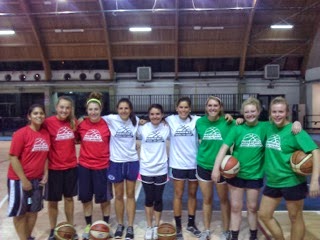
"I saw this photo today on Facebook because one of my teammates from this weeks basketball tournament posted it. It made me happy to see this picture because since I have been in Italy, playing basketball has made me feel the most at home. It also filled me with joy because I remembered how great it was to meet and play with all of the Italian girls (Lauren Jagels)".


"I had the fortunate experience of going to Corfu, Greece, this weekend. From our balcony of our hotel room, we had the most beautiful view of the Agios Gordis Beach (shown below) where we got to kayak and swim while the sun shined down on us. When I was kayaking in the vibrant blue water, I thought sarcastically, "I have a pretty rough life." On our way back from Corfu to Italy, I was happy to return to the lively atmosphere of Florence and all that accompanies it" (Sean Brennan).

"I love the availability of art in Florence, with the many museums and churches. I feel like it is easy to take for granted the opportunities to see this art. I have never lived somewhere where there is always something to see and do. It is overwhelming but also exciting to know the endless amounts of history and art that are within Florence. This picture is outside of the Uffizi Gallery, which I have yet to go inside of. But will most definitely spend a lot of time in. It makes me feel as if there should never be a unused minute here" (Sophia Henager).


"This weekend I went to the Ponte Vecchio for the first time. We have walked through a lot of different places in Florence and even taken a few tours. But it hit me this weekend taking 'selfies' on the bridge. We are in a place that is known in history as one of the culturally richest that the world has seen; so many artists and great thinkers lived and made a mark in this town.On the other and you also have modern history, like the world wars that took place on the same streets. It just boggles my mind to think that I am able to live and study in a place like this!" (Ashley Swanson).
"It is a picture that depicts a scene that I found interesting this weekend. I always am interested to watch the street artists paint and interact with potential customers. I often wonder how they make a living off selling these beautiful works of art. Also, I wonder what the artists' opinions are of the street vendors that sell cheap replicas of famous painting that don't involve any skill on their part to recreate. What is the artist community like and how is it perceived in a place like Florence where old art often the focus? I hope through my travels around Florence I will learn more about various street artists and even buy a piece" (Jess Nevins).

“Running in Florence: During our second week in Florence, after having been overwhelmed by the amount of pasta I had been inhaling, I decided it was time to get back into my exercise routine. So one morning, when it was not so bright but definitely early, I went for a run. I left my pensione, Hotel Nazionale, and ran in the direction I had heard the river Arno would be. I had yet to venture far enough to see the river, one of the key aspects of the beautiful city of Florence. I was running and running, getting distracted by side streets and the early morning work rush when I came around the corner and was instantly left breathless. This was not because I had been running so hard, or because I was out of shape, but because the sun was just barely beginning to rise on the eastern side of Florence, the glow was just beginning to shine on the buildings, and the river Arno actually ran smooth and still. The light had not given away to its mucky nature yet and it truly looked magical. I ran back and forth across the bridges until I came to the last one, it was there that I truly realized I was in the city of Firenze, in Italy, so many miles away from home. It was here that I realized I was about to embark on the greatest adventure I’d had in my life thus far, and this was only the beginning” (Dominique Scott).


"This photo is of a sunset in Florence last week that I took on the balcony of Hotel Cordova. I really love this photo because it reminded me how lucky I am to be here and that in that peaceful moment, how much I love Florence" (Brigid Dunn).


"One of the first weeks in Florence, a few friends and I went to a panini place called Pino's Sandwiches to grab some lunch before going to explore the city. We walked in, and Pino, the owner, immediately and warmly welcomed us, encouraging us to take pictures of the food (as we were already doing), and even invited us behind the counter to take a picture with him. He was very talkative and eager to both learn about us and share about himself. He emphasized the importance of relationships with his customers, and wanted us to definitely come by again" (Cecilia Vollert).


"On Wednesday last week I took a cooking class in which we cooked a full three course meal. We were given all of the recipes afterwards to take home at the end of the semester. For me, this made me think about how I want to enjoy myself here, but I also want to be able to change and improve myself as a person through my experiences in a different culture. The opportunity to cook an authentic Tuscan meal for my family will allow me to always keep a piece of Florence with me and I will know that I got more than some crazy nights and great friends out of this study abroad experience" (Adam Wells).

"I chose a picture of the 5th floor balcony of my pensione Cordova because this will be my new home for the next year. Our balcony has an incredible view of the city and is a place where all my friends get together and eat or hangout during our free time. This picture gives me a feeling of belonging in a city that is completely new to me, a sort of home away from home. I haven't felt homesick yet because there has been such a strong community here and the balcony is a symbol of that community and coming together to spend quality time with one another" (Maria Black).


"This his picture was taken when I went to go visit the archaeology museum in Florence, I went with my Florence of the Medici class. We saw was the secret room of the Medici Princess Maria Maddalena. I had read a little about her before I took this class, and knew she was handicapped and that her palace had to be adapted to fit her disabilities. I had no idea that she was so deeply religious and required her own handicap accessible room to worship in. Going into the room was one of the most inspiring things I have ever done. It was so amazing to get to be able to go into a room that was so important to someone who was such a big part of shaping history. I thought it was interesting that her balcony was hidden to the rest of the public, not sticking out in the middle of the church drawing all the attention to her, like the theater seats of kings and queens of this time. She wanted a place to worship but she also did not want to take the attention away from the church and from God. I thought it was interesting that it was a big and comfortable room so she could fit friends in easily, like a place to hang out that just happened to be connected to a church. Going into her secret room is an experience I will never forget and definitely one of the highlights of my trip to Florence so far" (Audrey Jackson).

Oct 15, 2013

Pierluca Birindelli, Docent in Sociology, University of Helsinki

On October 1st 2013 I’ve been granted  the title of Docent in Sociology by Thomas Wilhelmsson, Chancellor of the University of Helsinki.
The University of Helsinki is consistently ranked in the top 100 out of world's 15.000 universities.
1st  in Webometrics Ranking 2012 in Nordic Countries
69th  in the QS University Rankings 2013
As a founding member of the League of European Research Universities(LERU), the university promotes science and research together with European's top research-intensive universities. The university's goal is to become one of the 50 best universities in the world. On the journey towards the top 50, the University of Helsinki aims to build a better world by approaching global problems from a multidisciplinary perspective. Within UH I’ve been teaching the course “Identity and Culture. A Narrative and Holistic Approach” in the Research Master´s Degree Programmein Social Sciences (REMS), which is a full-time, two-year integrated study programme. The Programme is offered by the Department of Social Research at the Faculty of Social Sciences, and you can major in one of the three following subjects: Social and Public Policy/Urban Studies; Social Psychology; Sociology. This interdisciplinary programme is designed to provide a firm grounding in the theory, philosophy and methods of social research. The REMS programme provides the students with in-depth skills in both quantitative and qualitative research methods allowing one to proceed to a PhD studies after their graduation or into social research occupations within the public and private sectors. 

Oct 14, 2013

OECD Skills Outlook 2013: Finland and Japan at the top, Italy and Spain at the bottom

Workers in Spain and Italy are the least skilled among 24 developed countries surveyed by the Organization for Economic Cooperation and Development, a deficit that is likely to impede the ability of those two countries to boost their competitiveness as part of efforts to overcome the euro-zone fiscal crisis.  Italy ranks bottom, and Spain second-to-last among the 24 countries in literacy skills. Over one in five adults in both countries can't read as well as a 10-year-old child would be expected to in most education systems (Wall Street Journal). In a report that covered a wide range of countries, the OECD also concluded that in both the U.S. and the U.K., younger people are significantly less-skilled relative to their peers than older people, while Japan and Finland boast the most-skilled workers. The study found that Americans ranked 16 out of 23 industrialized countries in literacy and 21 out of 23 in numeracy (Wall Street Journal). 

"The survey of adult skills  assesses the proficiency of adults from age 16 onwards in literacy, numeracy and problem solving in technology-rich environments. These skills are “key information-processing competencies” that are relevant to adults in many social contexts and work situations, and necessary for fully integrating and participating in the labour market, education and training, and social and civic life. In addition, the survey collects a range of information on the reading- and numeracy-related activities of respondents, the use of information and communication technologies at work and in everyday life, and on a range of generic skills, such as collaborating with others and organising one’s time, required of individuals in their work. Respondents are also asked whether their skills and qualifications match their work requirements and whether they have autonomy over key aspects of their work” (OECD).
Around 166000 adults aged 16-65 were surveyed in 24 countries and sub-national regions: 22 OECD member countries – Australia, Austria, Belgium (Flanders), Canada, the Czech Republic, Denmark, Estonia, Finland, France, Germany, Ireland, Italy, Japan, Korea, the Netherlands, Norway, Poland, the Slovak Republic, Spain, Sweden, the United Kingdom (England and Northern Ireland), and the United States; and two partner countries – Cyprus and the Russian Federation.

Literacy
Literacy is defined as the ability to understand, evaluate, use and engage with written texts to participate in society, achieve one’s goals, and develop one’s knowledge and potential. Literacy encompasses a range of skills from the decoding of written words and sentences to the comprehension, interpretation, and evaluation of complex texts. It does not, however, involve the production of text (writing). Information on the skills of adults with low levels of proficiency is provided by an assessment of reading components that covers text vocabulary, sentence comprehension and passage fluency.


Oct 9, 2013

Unstable Territory. Borders and Identity in Contemporary Art


Unstable Territory. Borders and Identity in Contemporary Art,  11 October 2013 – 19 January 2014, opening: Thursday 10 October 2013 at 19.00, Centre for Contemporary Culture Strozzina, Palazzo Strozzi, Florence.
Artists: Kader Attia, Zanny Begg & Oliver Ressler, Adam Broomberg & Oliver Chanarin, Paolo Cirio, Tadashi Kawamata, Sigalit Landau, Richard Mosse, Paulo Nazareth, Jo Ractliffe, The Cool Couple.
Unstable Territory showcases work by international artists which will encourage visitors to reconsider the notion of territory in a contemporary world.  Whilst the latter is increasingly characterized by the obsolescence of such concepts as the nation state and borders, there is, at the same time, a return to new forms of nationalism and renewed interest in the individual in relation to a specific area or community.
The astonishing development of mobility for both people and goods, the digitization of communication and knowledge, migration and an increasingly global economy have all radically changed people’s perception of territories, borders and boundaries.  In view of the instability of these concepts crucial to the definition of personal identity, two different – though not necessarily conflicting – trends appear to be taking shape: one based on seeking shelter in the safety and proximity of the micro-territory, the region or even the family; the other, as theorized by sociologist Ulrich Beck, involving a new conception of cosmopolitanism in its most democratic and egalitarian sense.
What does it mean when we talk about “territory” today?  The term does not simply refer to a geographical or spatial area, it also refers to a concept of social and cultural belonging and extends into the personal, psychological and mental sphere.  The works in this exhibition reflect different approaches, lifestyles and ways of perceiving the unstable relationship between identity, territory and borders in an age of great expectations (and illusions) regarding a border-less society, a shared global territory.  Photographs, videos and installations spark reflections on the notion of the border as discovery or barrier, on the hybridization between cosmopolitanism and territorial claims, on the figure of the artist himself as traveler, nomad or experimenter teetering on the edge of physical and symbolic territories. Read more: Strozzina Center for Contemprary Culture at Palazzo Strozzi.
Below an interview with Richard Mosse